Thank you!
More to come—we’ll be in touch shortly.

Living with CAH means focusing on two main goals: replacing the cortisol your body can't make and keeping androgen levels in check. Steroids do a great job with replacing cortisol but don't always work so well when it comes to controlling androgens.
So, what else might help with androgen control? That's what we're here to explore: discover a breakthrough medicine.
If you love geeking out on the science, this next part is for you—keep reading for a closer look at what this approach is all about.
Remember the HPA axis? That's where a cascade of signals triggers hormone production. First, the hypothalamus releases corticotropin-releasing factor (CRF) in response to low cortisol. Then the pituitary gland detects CRF through CRF type 1 (CRF1) receptors. Like the name suggests, CRF1 receptors "receive" the CRF signal and set off a chain reaction where high levels of ACTH are released into the body, resulting in excess androgens.
In people with CAH, this cycle keeps repeating:
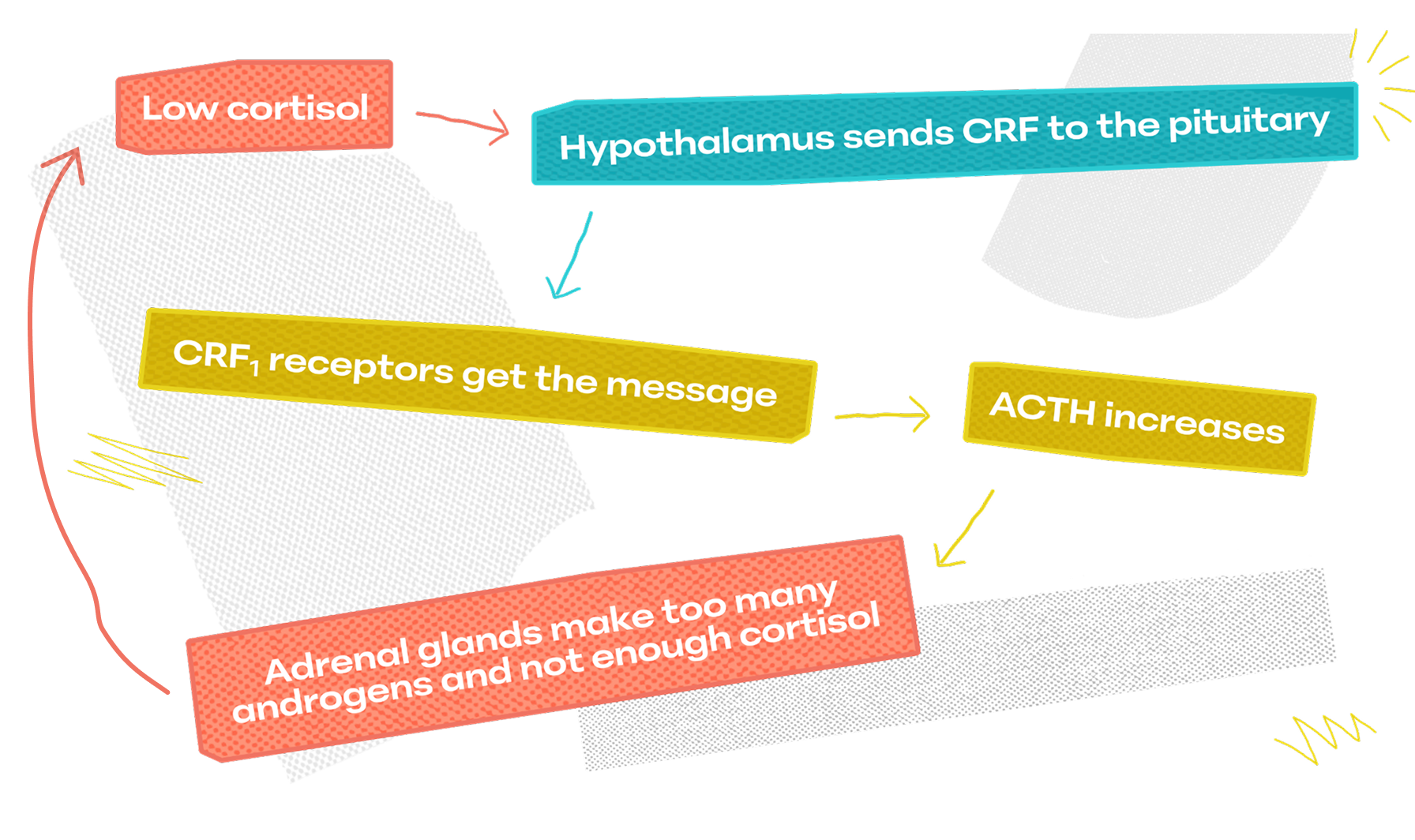
This cycle is what leads to ongoing androgen overproduction in people with CAH. But researchers discovered that disrupting how CRF interacts with the CRF1 receptor can help lower the amount of ACTH and androgens in the body.
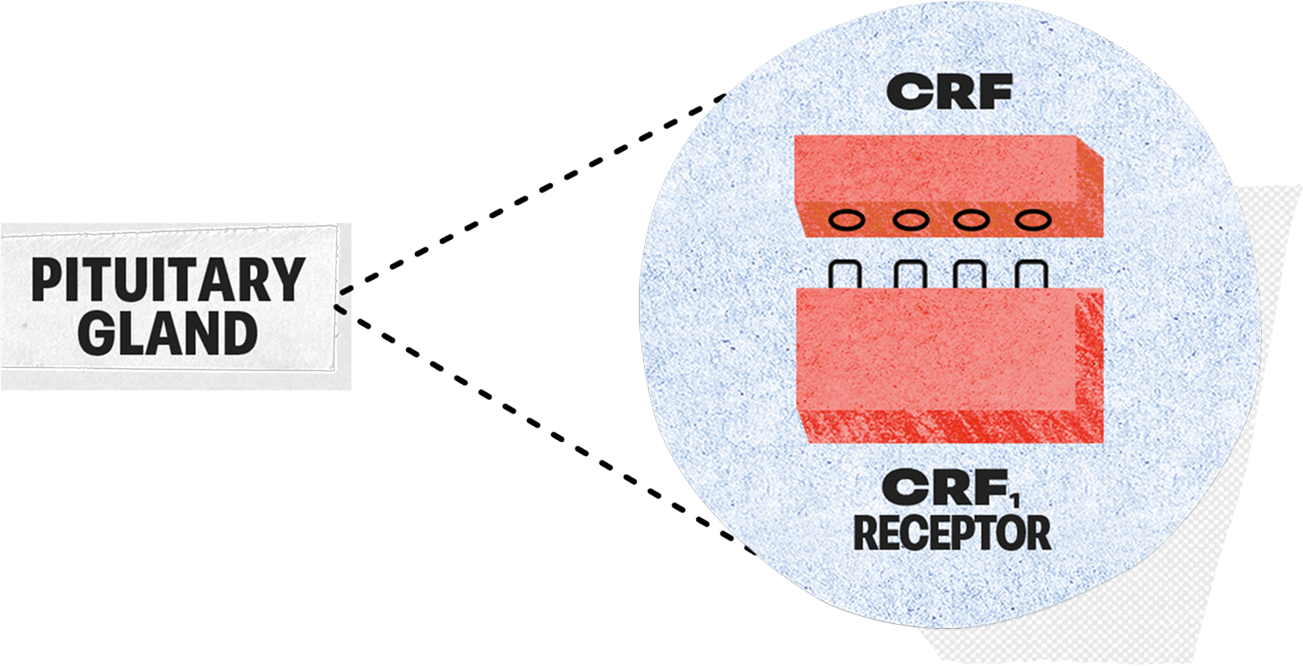
There's another way to manage androgens—one that works alongside but independently of steroids.
This type of treatment interrupts CRF from activating its receptor, which prevents the release of ACTH. Less ACTH helps lower androgen production to more target levels.
When the CRF1 signal is interrupted:
And as a result:
This approach doesn't replace steroids. They are still needed to replace the missing cortisol, but it may help reduce the amount of steroids needed.
A CRF1 receptor antagonist is FDA approved and available.
Learn more about this treatment
Sign up for emails and get helpful tools and resources, real stories, and insightful tips for navigating life with CAH—straight to your inbox.
Thank you!
More to come—we’ll be in touch shortly.
