Thank you!
More to come—we’ll be in touch shortly.

CAH can feel complicated, but understanding a few basic ideas can help. Let's take a closer look.
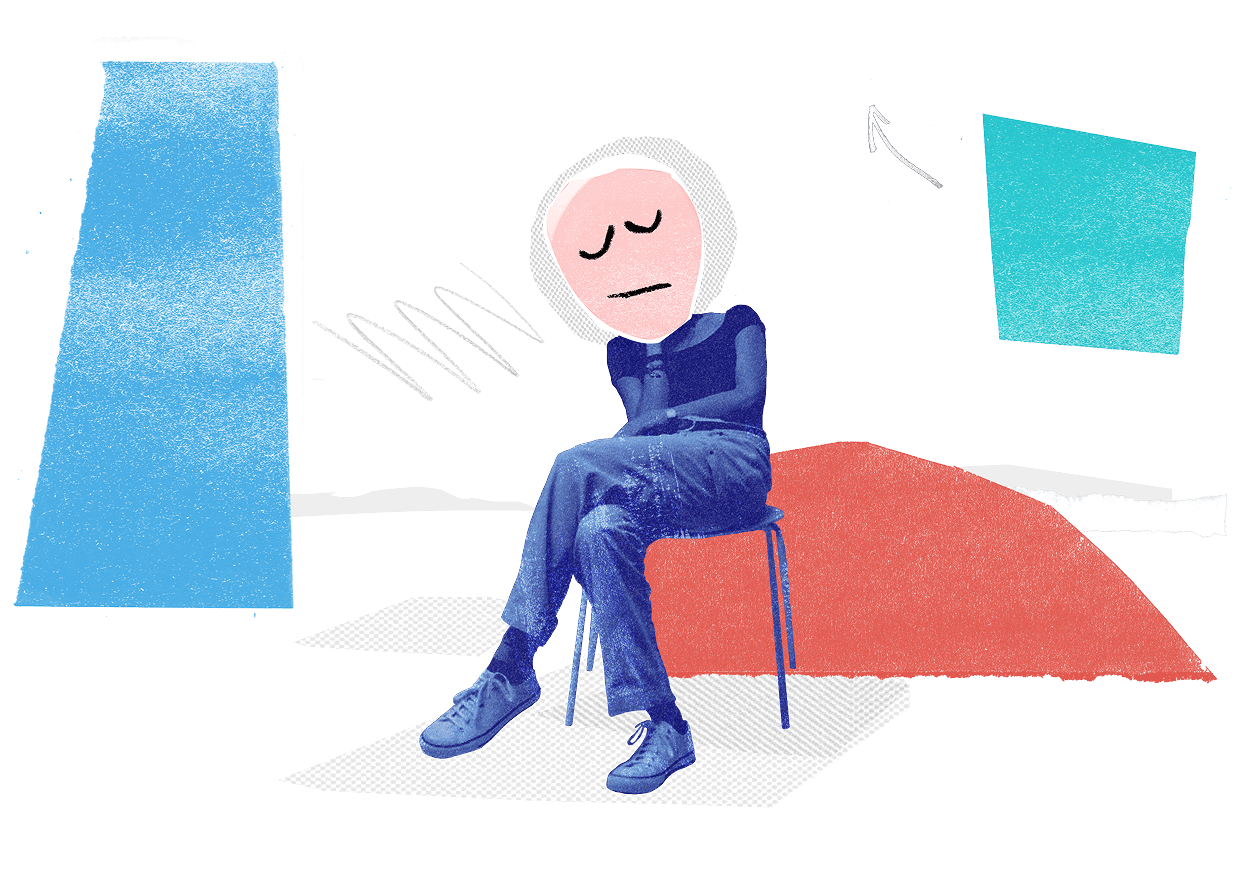
Low cortisol, high androgens, what the C@H?!
Yeah, it's a lot. But we got you—this short video breaks it all down step by step. Need more clarity? Your doctor's the best person to talk to.
Length: 3:00
The Science Behind CAH: What’s Going on in My Body?
[Adult VO 1 — Female, mid-30s]
Our doctor said some of my daughter’s symptoms are caused by high androgens—not low cortisol.
[Adult VO 2 — Male, late 20s]
My doctor mentioned androgens as well. He said he gives me a higher dose of prescription steroids to lower my androgen levels.
[Adult VO 3 — Female, early 20s]
Wait, steroids are used to treat high androgens and low cortisol? WHAT THE CAH?!
[Narrator VO]
CAH can feel complicated. But breaking it down can make it easier to understand what’s happening in your body.
Your body has a system that works automatically and is especially important during stressful situations. The system creates different types of hormones.
These hormones are signals that three organs – the hypothalamus, the pituitary gland, and the adrenal glands – use to work together.
Let’s take a closer look.
The hypothalamus is a part of your brain. It’s like the command center of the system. When you’re stressed, it’s the first to respond.
The pituitary gland receives hormone signals from the hypothalamus and then sends its own hormone signals to the next organ in the system, the adrenal glands.
The adrenal glands sit on top of the kidneys. It’s their job to make cortisol, a hormone your body needs for a number of activities, including dealing with stress.
The whole system is called the hypothalamic-pituitary-adrenal axis. But that’s a real mouthful, so it’s usually just called the HPA axis for short.
[Adult VO 2 — male]
Do the organs really send each other signals?
[Narrator VO]
Yes—they use hormones to communicate with each other.
Here’s how it works in someone who doesn’t have CAH.
The hypothalamus makes a hormone called CRF to signal the pituitary gland.
When the pituitary receives CRF from the hypothalamus, it knows to make its own signal that will be sent to the adrenal glands. That's a hormone called ACTH.
When the adrenal glands detect ACTH, that’s their signal to start making cortisol.
Once the adrenal glands have made enough cortisol, that’s the signal for the hypothalamus to slow down the system.
It slows signaling for more cortisol until cortisol levels drop again.
[Adult VO 2 — male]
I know my body can’t make much cortisol. Or it might not make any at all. Does that affect how the system works?
[Narrator VO]
It does! In people with CAH, there’s not enough cortisol to send the signal to the hypothalamus.
[Adult VO 2 — male]
So the system doesn’t know when to slow down.
[Narrator VO]
Exactly. It keeps going. The adrenal glands keep getting signals to make cortisol, but they can’t make much, if any, due to a missing enzyme. Instead, they keep making the hormones they can make, which are androgens.
The result is, people with CAH make more androgens than the body needs.
[Adult VO 1 — female]
That explains why my daughter has high androgen levels.
[Narrator VO]
That’s right. So there are really two issues for people with CAH—androgens that are too high and cortisol that is too low.
Prescription steroids are used to treat both. Steroids called glucocorticoids are used to treat low cortisol by replacing the missing cortisol in the body.
But to treat excess androgens, even higher doses of steroids are needed – more than the body would make on its own. For people with CAH, these high-dose steroids are what signal to the hypothalamus to slow down.
But high-dose steroids can have many side effects, some serious.
[Adult 2 VO — male]
They do! I’ve had a hard time with those. I wish I could take a lower dose. I’m going to talk to my doctor about it.
[Narrator VO]
Managing excess androgens with high doses of steroids can be a challenge. But a closer look at the HPA axis – especially the hormone signals between its parts – might provide alternative ways of thinking about treatment.
[Adult VO 1 — female]
It’s not always easy to know what questions to ask our doctor. But this information makes me feel much more prepared for our next visit.
[Narrator VO]
The science behind CAH is complex. But knowing a little more about it, and about treatment, can help you advocate for your child or yourself.
“If there's a lot of stress—mental or physical—I get extremely tired. And when I'm sick, I feel more lethargic than others.”
The body has a built-in system to help you get through your day, including how to respond to stressful situations like illness or injury. It's called the HPA (short for hypothalamic-pituitary-adrenal) axis and is made up of 3 parts that work together. These parts send hormone signals back and forth to help your body make the right amount of cortisol at the right time—whether it's what you need for regular daily activities or extra amounts when your body might be under stress.
Let's break down what each part does and how they're supposed to work together:

The hypothalamus (in your brain)
When the body senses it needs more cortisol, the hypothalamus makes a hormone called corticotropin-releasing factor (CRF) that signals the pituitary.

The pituitary gland (sits below the hypothalamus)
When receptors in the pituitary called CRF₁ receive the CRF signal, a hormone called adrenocorticotropic hormone (ACTH) is made. ACTH signals the adrenal glands to get to work.
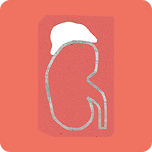
The adrenal glands (on top of your kidneys)
When the adrenal glands receive the ACTH signal, they make cortisol, aldosterone, and androgens.
Once the body has enough cortisol, it sends a message to slow down the signals in the HPA axis. This is the "negative feedback loop" that your doctor may have mentioned.
Read on to find out how the HPA axis doesn't work the way it should in people with CAH.
Cortisol normally acts like a brake—it loops back to the brain to slow down signaling for cortisol once the body has enough. That's called a negative feedback loop. But in people with CAH, the adrenal glands can't make enough cortisol to press those brakes, so the brain doesn't know to slow down the signal asking for more.
So here's what happens when someone has CAH:
This is why the adrenal glands make too many androgens in people with CAH.
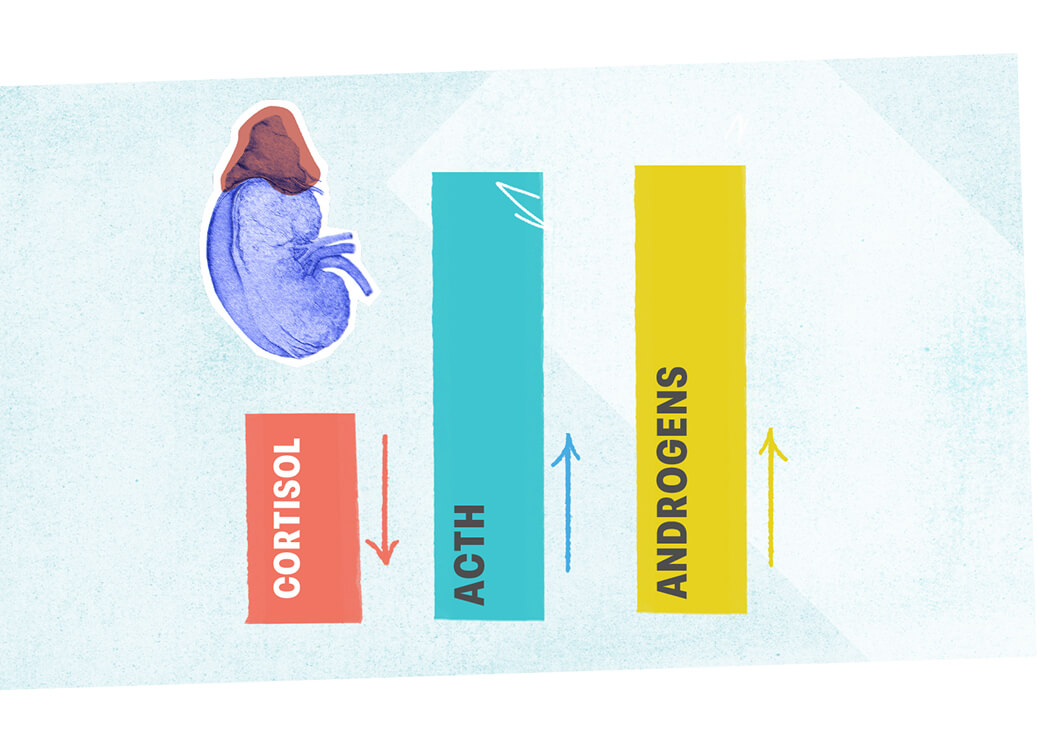
Cortisol replacement and androgen control—two different challenges in CAH
Your doctor might try to manage both of these goals with steroids, but that can be a constant struggle. Everyone with CAH needs a certain amount of steroids to replace the cortisol their body can't make. But when steroids alone are used to control androgens, it takes higher doses than what the body needs to replace cortisol. High-dose steroids carry additional health risks and may still not keep androgen levels in check—causing treatment-related side effects in kids, teens, and adults.
And while many symptoms of CAH are tied to excess androgens, some are linked directly to high levels of ACTH, such as TARTs (testicular adrenal rest tumors) and OARTs (ovarian adrenal rest tumors).
Discover how targeting the hormone pathway that leads to excess ACTH and androgens can offer a different way to manage CAH.

Sign up for emails and get helpful tools and resources, real stories, and insightful tips for navigating life with CAH—straight to your inbox.
Thank you!
More to come—we’ll be in touch shortly.
